
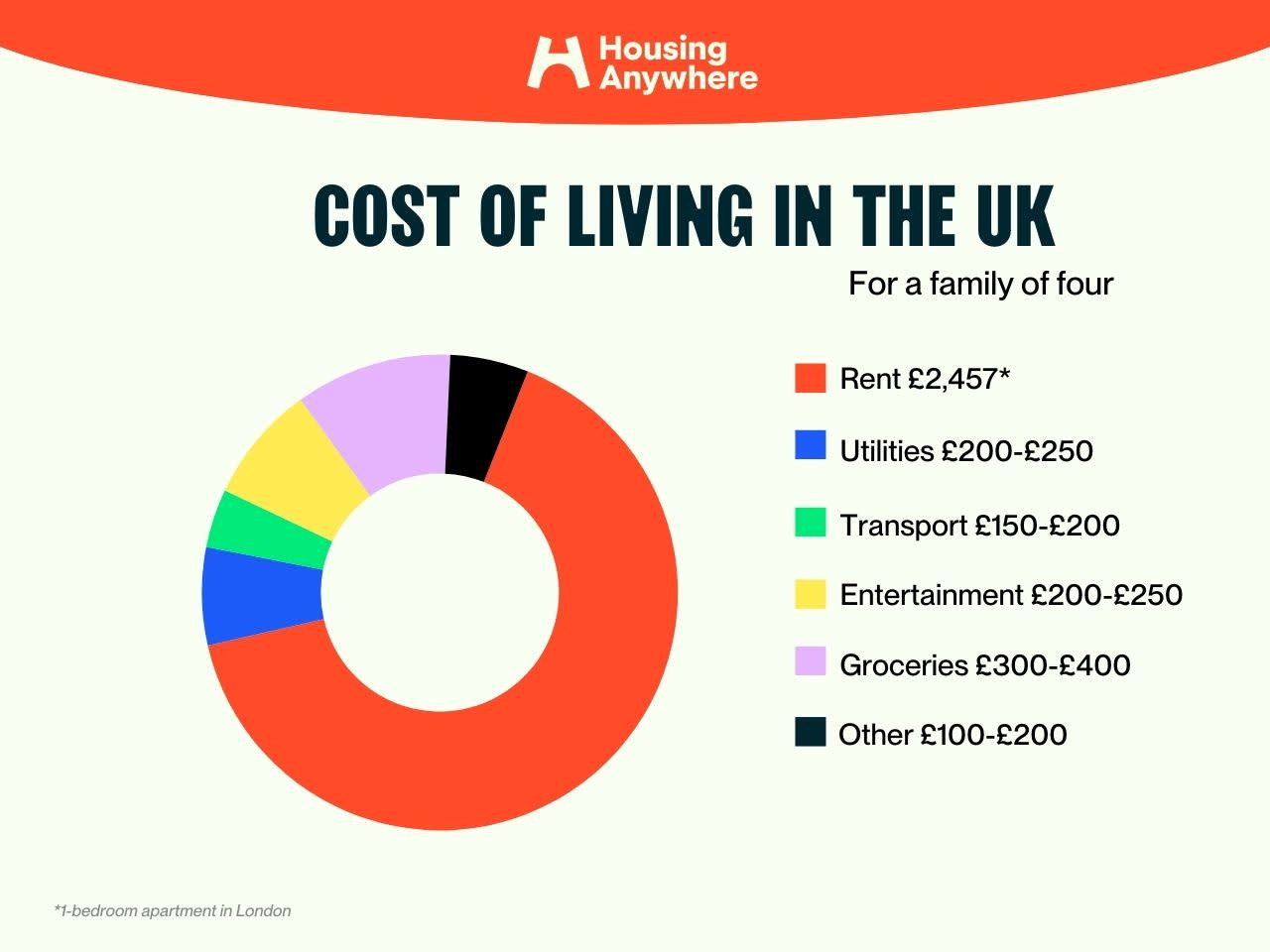
Cost of Living UK (2026 Guide)
The cost of living remains one of the biggest concerns for UK households in 2026. Prices for food, energy, rent and transport continue to rise faster than wages in many areas, creating pressure for families and individuals.
This guide breaks down what’s gone up, what’s stabilising, and how much the average household spends in 2026 — plus practical ways to lower your monthly costs.
1. What’s Driving the Cost of Living in 2026? Cost of Living UK
The main reasons behind rising UK costs are:
- Higher global energy prices
- Increase in housing demand
- Supply chain pressures
- Food production costs
- Rising council budgets and local tax increases
- Higher interest rates affecting mortgages and rent
Even though inflation has slowed compared to 2022–2023, prices remain high.
2. Energy Bills in 2026
The average household pays:
- £1,600 – £1,900 per year (combined gas + electricity)
- Around £130 – £160 per month
Standing charges remain high, and electric-only homes pay even more.
Full guide:
Energy Bill Cost UK 2026 – /energy-bill-cost-uk-2026/
3. Food Prices in 2026
Food inflation has slowed, but overall prices are still 12–18% higher than 2023.
Typical 2026 prices:
- Milk: £1.40–£1.60
- Bread: £1.20–£1.50
- Chicken: £4.50–£6/kg
- Eggs: £2–£2.50 per dozen
Average monthly food shop (family of 4):
£380 – £520 per month
4. Rent & Housing Costs (2026)
Rent remains one of the fastest-rising costs:
- Average UK rent: £1,050 – £1,350 per month
- London: £1,900 – £2,600 per month
- Northern England: £700 – £950 per month
House prices have stabilised, but mortgage payments remain high due to interest rates.
5. Transport & Fuel Costs (2026)
- Petrol: 145–160p per litre
- Diesel: 155–170p per litre
- Car insurance: up 20–35% vs last year
- Road tax: varies by emissions (see full guide below)
Full guide:
Road Tax Cost UK 2026 – /road-tax-cost-uk-2026/
6. Council Tax in 2026
Most councils have increased rates by 4–5%.
Average Band D bill:
£1,800 – £2,000 per year
Full guide:
Council Tax Cost UK 2026 – /council-tax-cost-uk-2026/
7. Water Bills (2026)
Average water + sewerage:
£470 – £520 per year
Some areas are paying record highs due to infrastructure upgrades.
Full guide:
Water Bill Cost UK 2026 – /water-bill-cost-uk-2026/
8. Broadband & Mobile Costs (2026)
Broadband average:
£28 – £45 per month
Mobile phone contracts:
£20 – £65 per month depending on handset and network.
9. Childcare Costs (2026)
Childcare is one of the biggest burdens:
- Nursery full-time: £900 – £1,500 per month
- Childminders: £4.50 – £7.50 per hour
- After-school clubs: £50 – £100 per week
10. Practical Ways to Reduce Your Cost of Living (Real Savings)
1. Switch to off-peak energy tariffs
Can reduce bills by 20–40%.
2. Challenge your Council Tax band
Many homes are placed incorrectly.
3. Switch broadband & mobile every 12–24 months
New customer deals save £120–£250/year.
4. Use supermarket loyalty & budget ranges
Cuts food bills by £50–£100/month.
5. Apply for available support
Such as the Warm Home Discount or childcare funding.
6. Avoid auto-renew on insurance
Shops around save 30–40%.
7. Install water-saving devices
Free from most water suppliers.
11. Related UK Cost Guides
To improve SEO, link to these pages: