
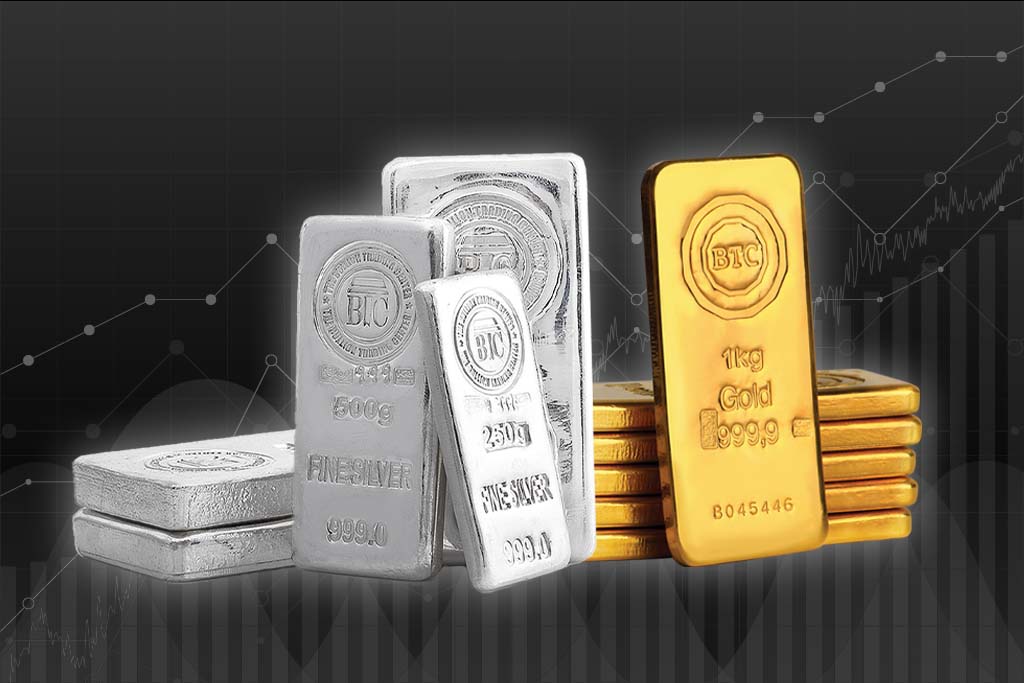
Gold vs Silver: Which Is Better in 2026?
Gold and silver are two of the most popular precious metals in the world. Both are seen as safe-haven assets during economic uncertainty, but they behave very differently in financial markets.
In 2026, investors are asking a key question: Is gold or silver the better investment right now?
The answer depends on your goals, risk tolerance, time horizon, and whether you are investing from the UK, where VAT rules also matter.
This guide compares gold and silver across price performance, volatility, tax treatment, industrial demand, and long-term outlook.
Why Investors Buy Gold
Gold is widely considered a “store of value.” It has been used as money and wealth protection for thousands of years.
Investors buy gold to:
- Hedge against inflation
- Protect wealth during recessions
- Reduce portfolio risk
- Offset stock market volatility
- Protect against currency weakness
Gold tends to perform well during financial crises and geopolitical tension.
You can track official pricing benchmarks via:
London Bullion Market Association (LBMA):
https://www.lbma.org.uk
Why Investors Buy Silver
Silver has two roles:
- Precious metal (like gold)
- Industrial metal (used in manufacturing)
Silver is used in:
- Solar panels
- Electric vehicles
- Electronics
- Medical equipment
Because of this, silver benefits not only from investor demand but also from industrial growth.
Price Volatility: Gold vs Silver
One of the biggest differences between gold and silver is volatility.
Gold
- Moves steadily
- Smaller daily swings
- Lower risk profile
Silver
- Larger price swings
- More sensitive to economic news
- Can rise or fall quickly
In strong bull markets, silver often outperforms gold.
In downturns, silver often falls harder.
Gold-to-Silver Ratio Explained
The gold-to-silver ratio measures how many ounces of silver equal one ounce of gold.
Historically:
- High ratio → silver may be undervalued
- Low ratio → silver may be overvalued
Investors monitor this ratio when deciding between the two metals.
VAT Differences in the UK
This is extremely important for UK investors.
Gold
Investment-grade gold is VAT-free in the UK.
Silver
Physical silver is subject to 20% VAT.
This means silver buyers pay significantly more upfront. For example:
- £1,000 gold purchase → no VAT
- £1,000 silver purchase → £1,200 total cost
For VAT guidance:
https://www.gov.uk/vat-rates
This makes gold more tax-efficient in the UK.
Inflation Hedge Comparison
Both metals are considered inflation hedges, but gold has historically been the stronger performer during prolonged inflation.
Silver sometimes lags during inflation spikes but may outperform during economic recovery.
If inflation remains persistent in 2026, gold may offer more stability.
Industrial Demand Impact
Gold’s demand is mostly:
- Investment
- Central banks
- Jewellery
Silver’s demand includes:
- Renewable energy
- Electric vehicles
- Electronics manufacturing
If green energy expansion continues, silver demand could increase significantly.
Performance During Recessions
During economic slowdowns:
- Gold often rises as investors seek safety
- Silver can initially fall due to reduced industrial demand
This makes gold generally more defensive.
Liquidity & Market Size
Gold has a much larger global market than silver.
Gold:
- Higher liquidity
- Easier to trade in large quantities
- Central bank reserves
Silver:
- Smaller market
- More speculative trading
- Greater price sensitivity
Risk Profile Comparison
Gold Risks
- Strong US dollar
- Rising interest rates
- Low inflation periods
Silver Risks
- Industrial slowdown
- High volatility
- VAT drag in the UK
- Speculative sell-offs
Silver carries higher short-term risk.
Which Has Better Upside Potential?
Silver historically has greater upside potential in bull markets.
Because silver’s market is smaller, money inflows can move prices more dramatically.
However, that also means sharper drops.
Gold offers steadier, more predictable growth.
Storage & Practical Considerations
Gold:
- Higher value in smaller space
- Easier to store
- Lower storage cost per value
Silver:
- Bulkier
- Heavier
- Higher storage costs for equivalent value
For physical investors, gold is more practical.
Gold vs Silver for Beginners
For beginners in the UK:
Gold may be better because:
- No VAT
- Lower volatility
- Easier long-term hold
Silver may suit:
- Higher risk investors
- Those betting on industrial demand
- Those seeking larger percentage gains
Silver Could Outperform If…
Silver may outperform gold if:
- Renewable energy expands rapidly
- Inflation rises but growth remains strong
- Investor risk appetite increases
- The gold-to-silver ratio falls sharply
Gold Could Outperform If…
Gold may outperform silver if:
- Recession deepens
- Geopolitical tensions rise
- Central banks continue buying gold
- Interest rates decline
Expert Outlook for 2026
Market analysts are watching:
- Central bank policy shifts
- Renewable energy demand
- Inflation data
- Global recession risks
- US dollar strength
Both metals remain sensitive to macroeconomic conditions.
Should You Own Both?
Many investors diversify:
- 70% gold (stability)
- 30% silver (growth potential)
This balances volatility and upside.
Diversification reduces risk.
Key Takeaways
- Gold is more stable and VAT-free in the UK
- Silver is more volatile but offers higher upside
- Gold is better for defensive investing
- Silver benefits from industrial growth
- UK tax treatment favours gold
There is no single “better” metal — it depends on your investment strategy.
Outbound Links
LBMA pricing benchmarks:
https://www.lbma.org.uk
UK VAT guidance:
https://www.gov.uk/vat-rates
Bank of England data:
https://www.bankofengland.co.uk
Suggested Internal Links
Link to:
- Silver Prices UK 2026
- Gold Prices UK 2026
- Inflation UK 2026 Explained
- VAT Explained UK 2026
- Cost of Living UK 2026
